
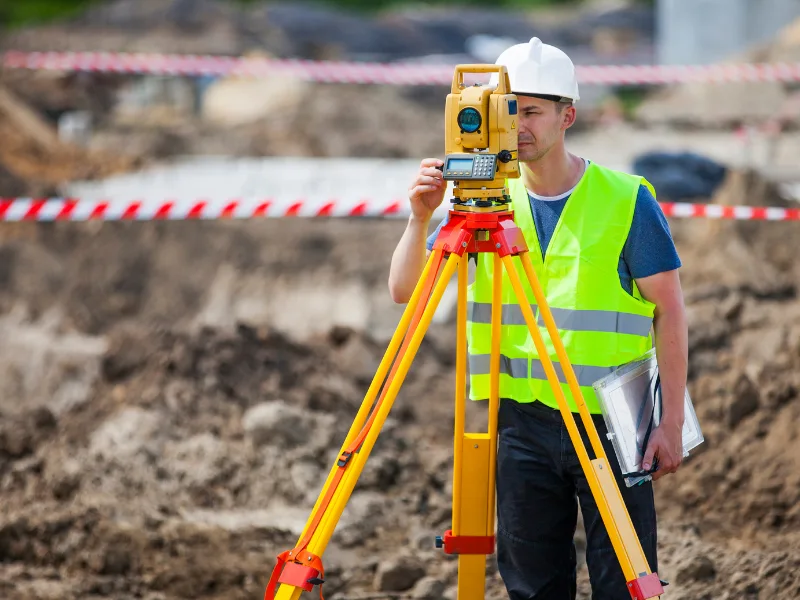
Surveying is an essential service in construction and land development, providing the precise measurements and spatial data necessary to ensure projects are executed accurately and efficiently. In Ontario, land surveyors play a critical role in facilitating the planning, design, and execution phases of a wide range of development projects. Their expertise not only ensures compliance with local laws and regulations but also minimizes risks, reduces costs, and promotes successful outcomes.

Schedule A Call with Juzer
The process begins with helping us understand your needs. Please get in touch via phone or email to schedule a free consultation.
The Benefits of Construction Surveying Services
Accurate surveying is a cornerstone of successful construction and land development projects. By employing an Ontario land surveyor, developers gain access to precise spatial data, reducing the risk of costly mistakes and delays. Professional surveyors also ensure that projects adhere to provincial and municipal regulations, preventing legal disputes and ensuring smooth approval processes.
Moreover, surveyors use advanced technology such as GPS, total stations, and drones to deliver high-quality results. This allows for faster turnaround times and greater accuracy compared to traditional methods.
Navigating Ontario’s Regulatory Landscape
In Ontario, land surveyors operate under strict regulatory frameworks governed by the Surveyors Act and the Association of Ontario Land Surveyors (AOLS). These regulations ensure that surveyors adhere to high professional and ethical standards. Developers working with licensed Ontario land surveyors can trust that their projects will meet all legal requirements.
Surveying is a vital service for construction and land development, providing the foundation for accurate planning and execution. Ontario land surveyors bring expertise, precision, and regulatory knowledge to every project, enabling developers to transform their visions into reality. By investing in professional surveying services, developers can ensure their projects proceed smoothly and achieve long-term success.
Frequently Asked Questions
What type of land survey is required before starting a construction project in Ontario?
Most construction projects begin with a boundary survey and a topographic survey. A boundary survey confirms legal property limits and identifies encroachments or easements that may affect development.
A topographic survey provides detailed information about the site’s elevation, terrain, utilities, and existing structures.
Together, these surveys give architects, engineers, and planners the information they need to design a project that fits the property and complies with local regulations.
How do surveyors support foundation placement during construction?
Surveyors provide construction layout staking that marks the precise location of building corners, foundation walls, and structural elements. Contractors rely on these control points to position excavation, footings, and foundations according to approved engineering drawings.
How long does a construction or development survey typically take?
Survey timelines depend on the size, complexity, and location of the property. Smaller residential development surveys may take a few days to complete, while large commercial or infrastructure projects can require several weeks of field work and data processing. Factors such as terrain conditions, access to the site, and municipal documentation requirements also influence the overall timeline.
What happens if construction is done without an accurate survey?
Building without an accurate survey increases the risk of encroachments, zoning violations, drainage issues, and permit delays. In serious cases, property owners may face legal disputes or be required to remove or modify structures that do not comply with property boundaries or municipal regulations. A professional survey reduces these risks and helps keep construction projects on schedule.
How much does a construction or development land survey cost in Ontario?
Survey costs depend on the type of survey required and the stage of the project. A boundary survey for early planning usually costs less than a detailed topographic survey or construction layout staking. Costs may increase if surveyors must review historical property records, verify boundaries, or complete multiple site visits during construction.
Developers usually receive a quote after sharing site plans and basic property details.
If you are planning a construction or land development project, contact our team to schedule a consultation and receive a survey quote for your site.

Schedule a Free Consultation
The process begins with helping us understand your needs. Please get in touch via phone or email to schedule a free consultation.